
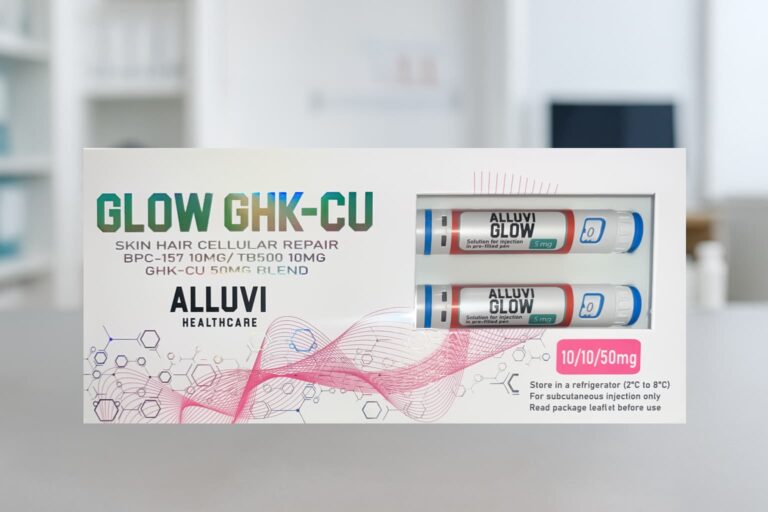
Glow 70mg (R&D Only)
Original price was: £80.00.£55.00Current price is: £55.00.
A 70mg Glow formulation supplied in a pre-filled research device, provided exclusively for controlled laboratory R&D applications. Delivered in sealed format to support compound stability analysis, formulation studies, and delivery mechanism evaluation.
Produced for laboratory research only. Not for human or veterinary consumption.
Pen dial displays the active GHK-Cu dosage, allowing precise tracking of the key ingredient rather than the total peptide blend.
Each Glow 70mg Research kit includes:
2 × Pre-filled Research pens (Each pen contains 5mg BPC-157, 5mg TB-500, 25mg GHK-Cu)
Total contents: 10mg BPC-157, 10mg TB-500, 50mg GHK-Cu
Research information sheet
Storage:
Store refrigerated (2–8°C). Do not freeze.
Supplied in fixed-volume sealed format for laboratory analysis.
Delivery: Dispatched with a cold pack.
Tracked 2 DAY UK Delivery.
Peptides For Men
Peptides are short chains of amino acids that play an important role in the body. They are found naturally in the human body and help with many biological functions such as muscle growth, skin repair, and hormone balance.
In recent years, peptides for men have become a popular topic, especially among those interested in fitness, wellness, and healthy aging. Many men are searching for ways to support their body performance, energy levels, and recovery.
What Are Peptides For Men?
Peptides for men are short chains of amino acids that help the body build and repair proteins. They are found naturally in the body and play an important role in many functions such as muscle growth, skin health, and hormone balance.
Many men are now interested in peptides because they may support fitness goals, recovery, and overall wellness.
How Do Peptides Work in the Male Body?
Peptides are short chains of amino acids. Amino acids are the building blocks of proteins. In simple terms, peptides are like small messages that tell the body what to do.
In the male body, peptides play an important role in many natural functions such as energy, muscle growth, hormone balance, skin repair, and recovery.
Because of these effects, peptides are widely discussed in health, fitness, and wellness topics.
How Peptides Work in the Body
Peptides work by sending signals between different cells in the body. Think of them like tiny messengers.
When a peptide reaches a specific cell, it attaches to that cell and gives instructions. These instructions can help the body:
- Build muscle
- Repair tissues
- Improve recovery
- Support hormone production
- Boost energy levels
Different peptides have different jobs depending on their structure.
Peptides and the Male Body
In men, peptides are especially important because they interact with hormones and physical performance systems.
1. Muscle Growth and Strength
Some peptides help stimulate processes linked to muscle development. They may support the body’s natural ability to repair and grow muscle after exercise.
This is why peptides are often discussed in fitness and bodybuilding communities.
2. Recovery and Healing
Peptides can help the body recover faster after exercise or injury. They may support tissue repair and reduce recovery time.
This is important for active men or athletes.
3. Hormone Support
Certain peptides influence hormone-related processes in the body. They may help support natural hormone balance, including testosterone-related functions.
Hormones are important for energy, mood, and physical performance.
4. Fat Metabolism
Some peptides may play a role in how the body uses and stores fat. They can support metabolism, which helps the body manage energy more efficiently.
5. Skin and Anti-Aging Support
Peptides are also used in skin health. They may help improve skin elasticity and support collagen production, which is important for a youthful appearance.
Possible Benefits of Peptides for Men
Peptides are short chains of amino acids that act as messengers in the body. They help cells communicate and support many natural processes.
In recent years, peptides have become popular in fitness, wellness, and anti-aging discussions—especially among men looking to support performance, recovery, and overall health.
While research is still developing, many peptides are being studied for their possible benefits in the male body.
1. May Support Muscle Growth and Strength
One of the most talked-about possible benefits of peptides for men is muscle support.
Certain peptides may help the body signal processes involved in muscle repair and growth. This is why they are often discussed in fitness and bodybuilding communities.
When combined with exercise and good nutrition, peptides are believed to potentially support:
- Lean muscle development
- Improved strength
- Faster muscle recovery after workouts
2. May Improve Exercise Recovery
After intense physical activity, the body needs time to recover. Some peptides are studied for their possible role in tissue repair and healing.
Men who train regularly or have active lifestyles are often interested in peptides because they may help:
- Reduce recovery time
- Support muscle repair
- Improve overall workout consistency
Faster recovery can help maintain better training performance over time.
3. May Support Energy and Performance
Peptides may also play a role in how the body manages energy. Some are believed to support natural metabolic processes, which can influence stamina and endurance.
Possible benefits may include:
- Better workout endurance
- Improved daily energy levels
- Reduced feelings of fatigue
However, results can vary depending on the type of peptide and individual body response.
4. May Help with Fat Metabolism
Some peptides are studied for their possible effect on fat metabolism. This means they may support how the body breaks down and uses stored fat for energy.
For men focused on fitness or weight management, this is an important area of interest.
Potential effects may include:
- Support for fat loss goals
- Improved metabolism efficiency
- Better body composition when combine with exercise
5. May Support Healthy Aging
As men age, natural hormone levels and recovery ability can change. Some peptides are being research for their possible role in supporting healthy aging.
They may help with:
- Skin elasticity and collagen support
- Muscle maintenance
- General vitality and wellness
This makes peptides popular in anti-aging discussions.
6. May Support Hormone-Related Functions
Certain peptides are thought to interact with hormone-related systems in the body. While they are not hormones themselves, they may support natural processes that influence hormone balance.
This can be important for:
- Energy levels
- Mood stability
- Physical performance
- Overall well-being
More research is still needed in this area.
7. May Support Skin and Tissue Health
Peptides are also widely used in skincare and recovery research. They may help support collagen production, which is important for skin strength and elasticity.
Possible benefits include:
- Healthier-looking skin
- Improved skin firmness
- Support for tissue repair
Common Types of Peptides for Men
Peptides are short chains of amino acids that act like signals in the body. They help control important functions such as muscle growth, recovery, energy levels, and skin health.
In men, different types of peptides are studied for different purposes. Some support fitness and performance, while others are linked to recovery or healthy aging.
Understanding the common types of peptides for men can help you know how they are often discussed in health and wellness.
1. Growth Hormone Releasing Peptides (GHRPs)
Growth Hormone Releasing Peptides are designed to support the natural release of growth hormone in the body.
Growth hormone is important for:
- Muscle growth
- Fat metabolism
- Recovery after exercise
- Energy levels
These peptides are popular in fitness discussions because they may help support the body’s natural performance processes.
2. Growth Hormone Releasing Hormones (GHRHs)
GHRHs work in a similar way to GHRPs but act slightly differently in the body. They help signal the pituitary gland to release growth hormone.
Possible areas of interest include:
- Muscle development support
- Improved recovery
- Better sleep quality (in some studies)
- General vitality
GHRHs are often studied for their role in aging and performance support.
3. Collagen Peptides
Collagen peptides are well known for their role in skin, joints, and connective tissues.
For men, they are often used to support:
- Joint health and flexibility
- Skin strength and elasticity
- Tendon and ligament support
- Recovery from physical activity
They are commonly found in supplements and protein powders.
4. Healing and Recovery Peptides
Some peptides are studied for their possible role in tissue repair and healing. These are often discussed in sports and recovery research.
They may support:
- Faster muscle recovery
- Reduced inflammation response
- Tissue repair after physical stress
- Improved healing processes
These peptides are popular among active men and athletes.
5. Metabolic Peptides
Metabolic peptides are linked to how the body uses energy and stores fat.
They may help support:
- Fat metabolism
- Energy balance
- Weight management goals
- Overall metabolic function
These peptides are often discussed in fitness and body composition topics.
6. Skin and Anti-Aging Peptides
Some peptides are used in skincare and anti-aging research. They support the body’s natural collagen and elastin production.
Possible benefits include:
- Firmer-looking skin
- Reduced signs of aging
- Improved skin hydration
- Better skin repair
These peptides are popular in cosmetic and wellness industries.
7. Performance and Endurance Peptides
Certain peptides are studied for their possible effects on physical performance and stamina.
They may support:
- Energy during workouts
- Endurance and stamina
- Faster recovery between sessions
- Improved physical output
These are often used in fitness-focused discussions.
Who Uses Peptides for Men?
Peptides are short chains of amino acids that act as messengers in the body. They help support natural processes like muscle growth, recovery, energy balance, and skin health.
Because of these effects, peptides are widely discussed in fitness, wellness, and health communities. Many different types of men use or research peptides for different reasons.
This article explains who uses peptides for men and why they are becoming popular.
1. Athletes and Sports Professionals
Athletes are one of the main groups interested in peptides.
They often focus on performance, recovery, and endurance. Peptides are studied for their possible role in helping the body recover faster after intense physical activity.
Athletes may be interested in peptides for:
- Faster muscle recovery after training
- Improved stamina and performance
- Support for injury recovery
- Better training consistency
Because athletes train at high intensity, recovery support is very important to them.
2. Bodybuilders and Fitness Enthusiasts
Bodybuilders and gym-goers are another major group who talk about peptides.
They are usually focused on building muscle, reducing fat, and improving body shape.
Peptides may be of interest for:
- Supporting lean muscle development
- Helping with fat metabolism
- Improving workout recovery
- Enhancing overall training results
In fitness culture, peptides are often discussed as part of advanced training and nutrition strategies.
3. Men Focused on Anti-Aging and Wellness
Many men use peptides as part of their interest in healthy aging and overall wellness.
As men get older, natural changes in energy, skin, and recovery can occur. Peptides are studied for their possible role in supporting these areas.
They may be interested in:
- Healthier-looking skin
- Improved energy levels
- Better recovery from daily stress
- Support for overall vitality
This group is often focused on staying active and healthy as they age.
4. Men Recovering from Physical Strain or Injury
Some men explore peptides during recovery from physical stress or injury.
This includes people who may not be professional athletes but still lead active lifestyles or physically demanding jobs.
Possible interests include:
- Supporting tissue repair
- Reducing recovery time
- Improving joint and muscle comfort
- Helping the body recover naturally
Peptides are often discussed in recovery and rehabilitation contexts.
5. Men Interested in Body Composition and Weight Management
Some men use peptides in discussions around fat loss and body composition.
They are usually focused on improving how their body looks and functions.
They may look at peptides for:
- Supporting fat metabolism
- Improving energy usage
- Helping maintain lean muscle
- Supporting fitness goals
This group is often combining exercise, diet, and wellness strategies.
6. Men in Health and Wellness Communities
Peptides are also popular among men who follow health, nutrition, and biohacking trends.
These individuals are usually interested in understanding how the body works and how to optimize performance naturally.
They may explore peptides for:
- General wellness support
- Energy and focus
- Sleep and recovery balance
- Long-term health optimization
This group is often highly informed and research-focused.
How to Choose Peptides for Men
Peptides are short chains of amino acids that act as messengers in the body. They are widely discussed in fitness, wellness, and health communities because they may support muscle growth, recovery, energy, and overall well-being.
However, not all peptides are the same. Choosing the right peptides for men is important for safety, quality, and getting the desired results.
This guide explains in simple language how to choose peptides for men wisely.
1. Understand Your Goal First
Before choosing any peptide, it is important to clearly understand your goal.
Different peptides are used for different purposes, such as:
- Muscle growth and strength support
- Fat metabolism and body composition
- Recovery after exercise or injury
- Skin health and anti-aging support
- General wellness and energy
Knowing your goal helps you narrow down the right type of peptide.
2. Learn About Different Types of Peptides
Peptides are not all the same. Each type works differently in the body.
Some common categories include:
- Growth-related peptides – often discussed for muscle and recovery support
- Recovery peptides – studied for tissue repair and healing
- Collagen peptides – linked to skin, joints, and connective tissue health
- Metabolic peptides – related to energy and fat usage in the body
Understanding these categories helps you make better choices.
3. Focus on Quality and Purity
Quality is one of the most important factors when choosing peptides.
High-quality peptides are usually:
- Properly manufactured in controlled environments
- Tested for purity and consistency
- Clearly labeled with ingredients and strength information
Poor-quality products may not work properly and can be unsafe.
Always look for transparency and clear product information.
4. Check the Reputation of the Source
Where peptides come from matters a lot.
A reliable source should:
- Have positive reviews or reputation in the industry
- Provide clear product information and documentation
- Be transparent about testing and quality control
Avoid products from unknown or unverified sources, as quality cannot be guaranteed.
5. Understand Safety and Side Effects
Even though peptides are widely discussed, safety should always come first.
Before choosing peptides, consider:
- Possible side effects depending on the type
- Your personal health condition
- Interactions with other supplements or medications
It is always best to speak with a qualified healthcare professional before starting anything new.
6. Look at Dosage and Usage Information
Different peptides have different usage instructions.
When choosing peptides, make sure:
- Dosage information is clearly explained
- Usage guidelines are easy to understand
- Instructions are based on proper research or medical guidance
Never guess how to use peptides—proper information is important.
7. Choose Based on Realistic Expectations
It is important to have realistic expectations when choosing peptides.
Peptides are not magic solutions. Results depend on:
- Lifestyle (diet, sleep, exercise)
- Body type and metabolism
- Consistency and proper use
- Overall health condition
Healthy results usually come from a combination of good habits and proper support.
8. Avoid Unrealistic Claims
Be careful with products that promise:
- Instant muscle gain
- Fast fat loss without effort
- No diet or exercise needed results
If something sounds too good to be true, it usually is.
Reliable information is always based on science and realistic outcomes.
Frequently Asked Questions (FAQ) – Peptides for Men
Peptides for men are widely discuss in fitness, wellness, and health communities. They are short chains of amino acids that act as messengers in the body and may support functions like muscle growth, recovery, energy, and skin health.
Below are the most frequently aske questions about peptides for men, explained in simple language.
1. What are peptides for men?
Peptides are small proteins made of amino acids. In the male body, they help send signals between cells to support different functions such as muscle repair, metabolism, hormone balance, and recovery.
They are naturally found in the body but can also be made in laboratories for research and wellness purposes.
2. What do peptides do in the male body?
Peptides help the body communicate internally. Depending on the type, they may support:
- Muscle growth and strength
- Faster recovery after exercise
- Fat metabolism
- Energy levels
- Skin and tissue repair
Different peptides have different roles in the body.
3. Who uses peptides for men?
Peptides are used or researched by different groups of men, including:
- Athletes and sports professionals
- Bodybuilders and fitness enthusiasts
- Men focused on healthy aging
- People recovering from physical stress or injury
- Wellness and health optimization communities
Each group uses peptides for different goals.
4. Are peptides safe for men?
Peptides are widely studied, but safety depends on the type, quality, and how they are use.
Important points include:
- Not all peptides are the same
- Effects can vary from person to person
- Quality and source are very important
- Professional guidance is strongly recommend
Always speak with a qualified healthcare professional before use.
5. What are the possible benefits of peptides for men?
Some commonly discussed possible benefits include:
- Support for muscle growth
- Faster recovery after workouts
- Improved energy and stamina
- Support for fat metabolism
- Better skin and tissue health
However, results are not guarantee and depend on many factors like lifestyle and health.
6. Do peptides help with muscle building?
Some peptides are studied for their possible role in supporting muscle repair and growth. This is why they are popular in fitness and bodybuilding discussions.
However, peptides alone do not build muscle. Exercise, nutrition, and rest are still very important.
7. Can peptides help with fat loss?
Certain peptides are discuss in relation to fat metabolism and energy use. They may support how the body processes fat, but they are not a quick fix for weight loss.
Healthy diet and exercise remain the main factors in fat management.
8. How long do peptides take to work?
The time it takes to notice effects can vary widely depending on:
- Type of peptide
- Individual body response
- Lifestyle habits
- Consistency of use
Some people may notice changes sooner, while others may take longer.
9. Are peptides natural?
Yes. Peptides are naturally produce in the human body. They help regulate many biological functions. Synthetic peptides are creat to mimic or support these natural processes.
10. Do peptides have side effects?
Possible side effects depend on the specific peptide and individual reaction.
Some people may experience:
- Mild irritation at the application site
- Headaches or fatigue
- Temporary changes in appetite or sleep
Not everyone experiences side effects, but careful use is important.
11. Can peptides replace exercise or diet?
No. Peptides are not a replacement for healthy habits.
For best results, they should be combine with:
- Regular exercise
- Balanced nutrition
- Proper sleep
- Healthy lifestyle choices
12. What is the best way to choose peptides for men?
When choosing peptides, it is important to:
- Understand your personal goal
- Learn about different peptide types
- Focus on quality and purity
- Use trusted and reliable sources
- Get professional advice when needed
Be the first to review “Glow 70mg (R&D Only)”
Related products

Alluvi Simple Order
Alluvi Simple Order
Alluvi Simple Order
Alluvi Simple Order
Alluvi Simple Order
Alluvi Simple Order
Alluvi Simple Order
Reviews
There are no reviews yet.